
Why "Life Coach" Has a Brand Problem (And Why I Became One Anyway)
If you've ever rolled your eyes at the term "life coach," you're not wrong to. It's been stretched thin by Instagram gurus and six-figure-in-six-months promises until it barely means anything. I felt the same way. I actually hated the term. And then it became the thing that changed how I think, how I talk to people, and how I help clients get unstuck — including, maybe, you.
Here's the real story, and what it actually means if you're the kind of person who's skeptical of coaching but quietly wondering if you need one anyway.
The Jealousy That Started Everything
In 2013, I was fully devoted to my job in marketing, and I loved it. I was on the radio, appeared in TV commercials, and was building a design team. I was essentially a creative director — soon to be titled "Chief Experience Officer," a label usually reserved for tech. I preferred it, honestly, because it captured what I actually did: take abstract ideas and make them make sense for advisors, their teams, and their clients. Pulling coherence out of chaos was my superpower. The quieter one, just underneath it, was that I could write. I co-wrote my boss's radio segments, presentations, and keynotes.
Then I sat in an audience during one of his keynotes and got PISSED.
Every other speaker on that stage said things I could have said myself. I didn't think their words were especially profound. If I'm honest, I was jealous of their platform. Why were they asked to speak and not me? The answer was simple: they each had thirty-plus years in their fields — entrepreneur, doctor, therapist, financial advisor. They had the chops. I was still cutting my teeth.
Right as that landed, a voice in my head said: You don't have a platform. That's why no one asks you to speak. Get one.
So I shook my fist at the air and said, "FINE. GET ME ONE."
The Phone Call
The next day, my phone rang. It was Levi — a friend from college, back when he was the Assistant Dean, someone I'd stayed close to for years. "I'm being asked to join a life coach training program," he said, "and I think you should join me. It has your name all over it."
I laughed. Then I pushed back: "You just finished your PhD and you want to be a life coach? Have you lost it?"
"Whatever, Petaja," he said. "You have until the end of the week to decide."
Six months. The exact cost of my upcoming bonus. And I couldn't think of a more lackluster pursuit than "life coaching." Then the voice came back: You asked for a platform. This is it.
I talked to my boss — the training, the time away, the bonus I wanted to spend on it. He didn't hesitate. Told me to go for it, and that he'd even let me bring some of what I learned back into the office.
I said yes.
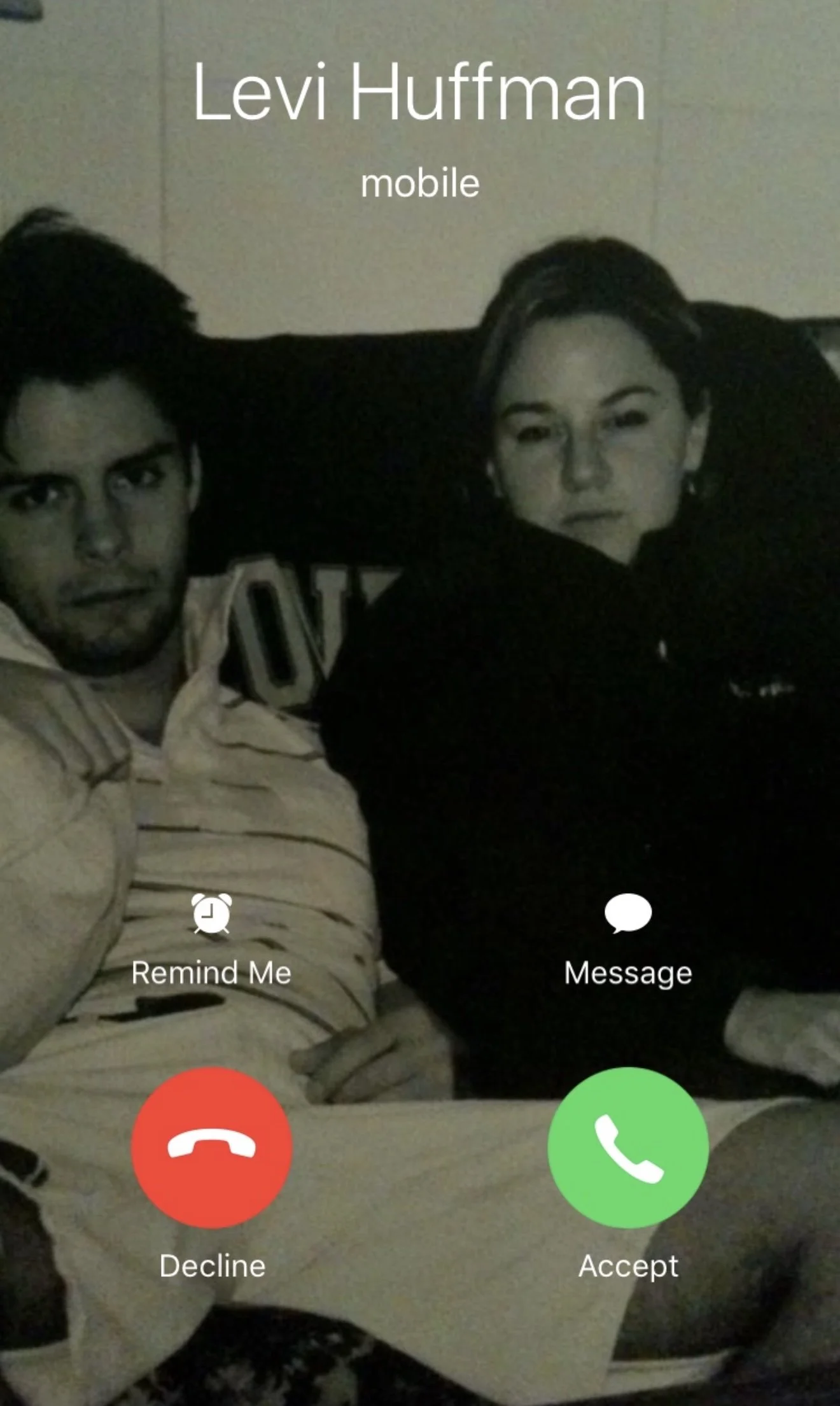
Levi & I at IWU in 2002 - the actual image on my phone the day he called in 2012
Getting My EGO Kicked (In the Best Way)
I expected something light. Popcorn-level self-help. What I got instead felt more like taking a shot of whiskey and getting hit with instant clarity.
Every bad habit I'd picked up over a decade in ministry got broken — not gently, but shattered, in front of the class, in real time. I was trained out of “leading the client”. Out of asking yes-or-no questions. Out of walking in with an agenda. The client leads. The coach is along for the ride.
And it turns out, that's a lot of fun!
That six months rewired how I think more than my bachelor's degree and a decade of ministry experience combined. It handed the power back to the person in front of me. I stopped needing to have the answer, because they had it the whole time — my job was just to lead them back to themselves. That sounds simple. It is not. It's a skill, and it's harder than it looks.
Why the Label Still Falls Short
Here's the actual problem with "life coach," and it's simple: the term implies the coach has the answers — the way a sports coach diagrams the play and tells you where to stand. But that's not what's true, and it's not what works.
Coaches don't have the answers. We have the questions.
The real shift doesn't happen when someone hands you a solution. It happens when someone asks you the one question you've been avoiding — and you finally hear yourself answer it out loud.
The truth is: whether I’m working with businesses as a strategic advisor, leaders as an executive coach, teams who need a culture shift or individuals in transition - my certification as a Life Coach has given me the tools to help anyone at any point in their journey.
What This Actually Means for You
If you've been carrying something you can't quite think your way out of — a decision you keep circling, a version of yourself you've lost touch with, a next step you already sense but haven't said out loud — that's not a sign something's wrong with you. That's exactly what coaching is built for.
You don't need someone with all the answers. You need someone trained to ask the right question at the right moment, then get out of your way while you find it. That's the whole craft. It's the thing I got trained — and shattered and rebuilt — to do.
The label “Life Coach” has a brand problem. But the truth is, if you work with me - your problem doesn't stand a chance.
If any part of this story sounded familiar, I'd love to talk. No pitch, no agenda — just a conversation, the same way it's always worked for me. [Book a session with me here.]
Curious if coaching is right for you? Whether you're skeptical of the label or just not sure what a session actually looks like, reach out — I'm happy to answer questions before you commit to anything.
